Provisioning storage for Azure SQL Edge running on a Raspberry Pi Kubernetes cluster

In a previous post we went through how to setup a Kubernetes cluster on Raspberry Pis and then deploy Azure SQL Edge to it.

In this post I want to go through how to configure a NFS server so that we can use that to provision persistent volumes in the Kubernetes cluster.

Once again, doing this on a Raspberry Pi 4 with an external USB SSD. The kit I bought was: –

1 x Raspberry Pi 4 Model B – 2GB RAM
1 x SanDisk Ultra 16 GB microSDHC Memory Card
1 x SanDisk 128 GB Solid State Flash Drive

The initial set up steps are the same as the previous posts, but we’re going to run through them here (as I don’t just want to link back to the previous blog).

So let’s go ahead and run through setting up a Raspberry Pi NFS server and then deploying persistent volumes for Azure SQL Edge.


Flashing the OS

The first thing to do is flash the SD card using Rufus: –

Grab the Ubuntu 20.04 ARM image from the website and flash the SD card: –
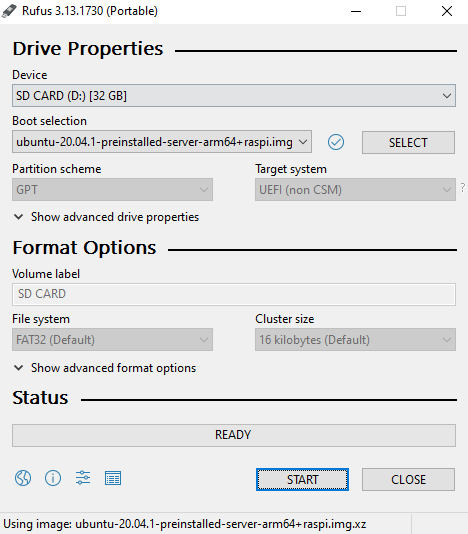
Once that’s done, connect the Pi to an internet connection, plug in the USB drive, and then power the Pi on.


Setting a static IP

Once the Pi is powered on, find it’s IP address on the network. Nmap can be used for this: –

nmap -sP 192.168.1.0/24

Or use a Network Analyzer application on your phone (I find the output of nmap can be confusing at times).

Then we can ssh to the Pi: –

ssh pi@192.168.1.xx

And then change the password of the default ubuntu user (default password is ubuntu): –
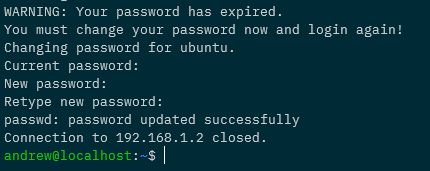
Ok, now we can ssh back into the Pi and set a static IP address. Edit the file /etc/netplan/50-cloud-init.yaml to look something like this: –
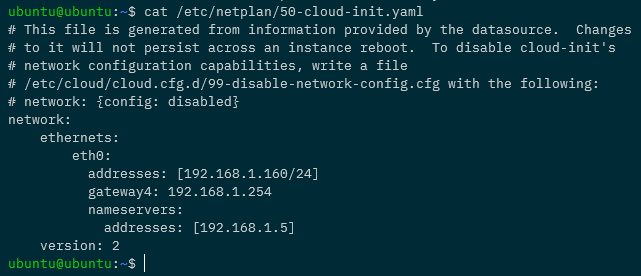
eth0 is the network the Pi is on (confirm with ip a), 192.168.1.160 is the IP address I’m setting, 192.168.1.254 is the gateway on my network, and 192.168.1.5 is my dns server (my pi-hole).

There is a warning there about changes not persisting, but they do 🙂

Now that the file is configured, we need to run: –

sudo netplan apply

Once this is executed it will break the current shell, wait for the Pi to come back on the network on the new IP address and ssh back into it.


Creating a custom user

Let’s now create a custom user, with sudo access, and diable the default ubuntu user.

To create a new user: –

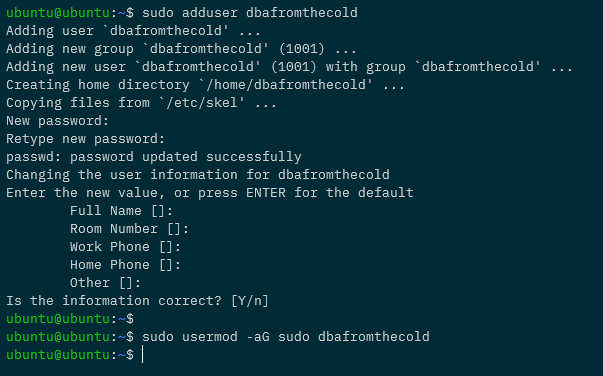
sudo adduser dbafromthecold
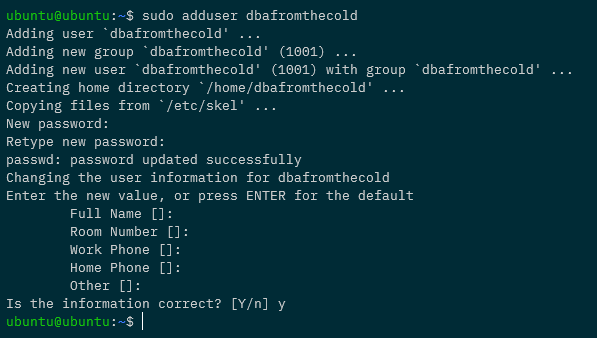
Add to the sudo group: –

sudo usermod -aG sudo dbafromthecold

Then log out of the Pi and log back in with the new user. Once in, disable the default ubuntu user: –

sudo usermod --expiredate 1 ubuntu

Cool! So we’re good to go to set up key based authentication into the Pi.


Setting up key based authentication

In the post about creating the cluster we already created an ssh key pair to use to log into the Pi but if we needed to create a new key we could just run: –

ssh-keygen

And follow the prompts to create a new key pair.

Now we can copy the public key to the Pi. Log out of the Pi and navigate to the location of the public key: –

ssh-copy-id -i ./raspberrypi_k8s.pub dbafromthecold@192.168.1.160
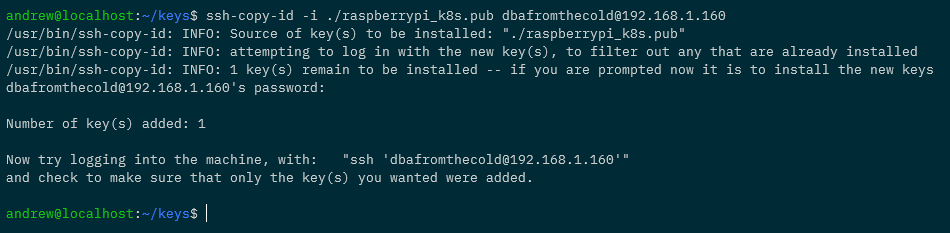
Once the key has been copied to the Pi, add an entry for the Pi into the ssh config file: –

Host pi-nfs-server
    HostName 192.168.1.160
    User dbafromthecold
    IdentityFile ~/raspberrypi_k8s

To make sure that’s all working, try logging into the Pi with: –

ssh dbafromthecold@pi-nfs-server

Installing and configuring the NFS server

Great! Ok, now we can configure the Pi. First thing, let’s rename it to pi-nfs-server and bounce: –

sudo hostnamectl set-hostname pi-nfs-server
sudo reboot

Once the Pi comes back up, log back in and install the nfs server itself: –

sudo apt-get install -y nfs-kernel-server

Now we need to find the USB drive on the Pi so that we can mount it: –

lsblk

And here you can see the USB drive as sda: –
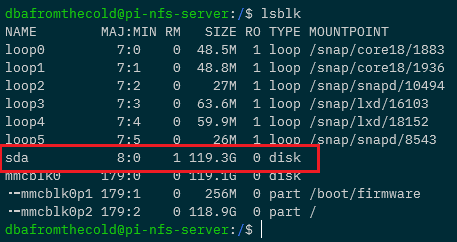
Another way to find the disk is to run: –

sudo lshw -class disk
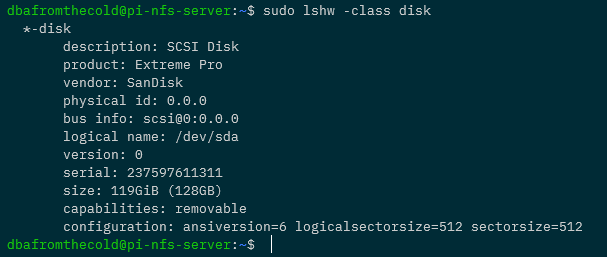
So we need to get some more information about /dev/sda it in order to mount it: –

sudo blkid /dev/sda

Here you can see the UUID of the drive and that it’s got a type of NTFS.

Now we’re going to create a folder to mount the drive (/mnt/sqledge): –

sudo mkdir /mnt/sqledge/

And then add a record for the mount into /etc/fstab using the UUID we got earlier for the drive: –

sudo vim /etc/fstab

And add (changing the UUID to the value retrieved earlier): –

UUID=242EC6792EC64390 /mnt/sqledge ntfs defaults 0 0

Then mount the drive to /mnt/sqledge: –

sudo mount -a

To confirm the disk is mounted: –

df -h
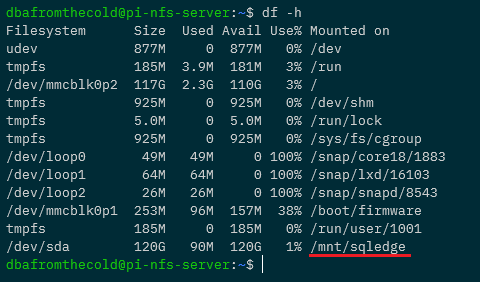
Great! We have our disk mounted. Now let’s create some subfolders for the SQL system, data, and log files: –

sudo mkdir /mnt/sqledge/{sqlsystem,sqldata,sqllog}

Ok, now we need to modify the export file so that the server knows which directories to share. Get your user and group ID using the id command: –

The edit the /etc/exports file: –

sudo vim /etc/exports

Add the following to the file: –

/mnt/sqledge *(rw,all_squash,insecure,async,no_subtree_check,anonuid=1001,anongid=1001)

N.B. – Update the final two numbers with the values from the id command. A full break down of what’s happening in this file is detailed here.

And then update: –

sudo exportfs -ra

Configuring the Kubernetes Nodes

Each node in the cluster needs to have the nfs tools installed: –

sudo apt-get install nfs-common

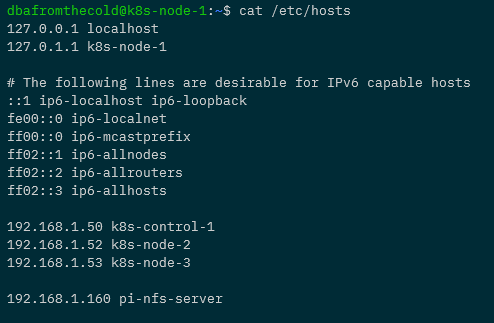
And each one will need a reference to the NFS server in its /etc/hosts file. Here’s what the hosts file on k8s-node-1 now looks like: –

Creating a persistent volume

Excellent stuff! Now we’re good to go to create three persistent volumes for our Azure SQL Edge pod: –

apiVersion: v1
kind: PersistentVolume
metadata:
  name: sqlsystem-pv
spec:
  capacity:
    storage: 1024Mi
  accessModes:
    - ReadWriteOnce
  nfs:
    server: pi-nfs-server
    path: "/mnt/sqledge/sqlsystem"
---
apiVersion: v1
kind: PersistentVolume
metadata:
  name: sqldata-pv
spec:
  capacity:
    storage: 1024Mi
  accessModes:
    - ReadWriteOnce
  nfs:
    server: pi-nfs-server
    path: "/mnt/sqledge/sqldata"
---
apiVersion: v1
kind: PersistentVolume
metadata:
  name: sqllog-pv
spec:
  capacity:
    storage: 1024Mi
  accessModes:
    - ReadWriteOnce
  nfs:
    server: pi-nfs-server
    path: "/mnt/sqledge/sqllog"

What this file will do is create three persistent volumes, 1GB in size (although that will kinda be ignored as we’re using NFS shares), in the ReadWriteOnce access mode, pointing at each of the folders we’ve created on the NFS server.

We can either create the file and deploy or run (do this locally with kubectl pointed at the Pi K8s cluster): –

kubectl apply -f https://gist.githubusercontent.com/dbafromthecold/da751e8c93a401524e4e59266812dc63/raw/d97c0a78887b6fcc41d0e48c46f05fe48981c530/azure-sql-edge-pv.yaml

To confirm: –

kubectl get pv

Now we can create three persistent volume claims for the persistent volumes: –

apiVersion: v1
kind: PersistentVolumeClaim
metadata:
  name: sqlsystem-pvc
spec:
  volumeName: sqlsystem-pv
  accessModes:
    - ReadWriteOnce
  resources:
    requests:
      storage: 1024Mi
---
apiVersion: v1
kind: PersistentVolumeClaim
metadata:
  name: sqldata-pvc
spec:
  volumeName: sqldata-pv
  accessModes:
    - ReadWriteOnce
  resources:
    requests:
      storage: 1024Mi
---
apiVersion: v1
kind: PersistentVolumeClaim
metadata:
  name: sqllog-pvc
spec:
  volumeName: sqllog-pv
  accessModes:
    - ReadWriteOnce
  resources:
    requests:
      storage: 1024Mi

Each one with the same AccessMode and size as the corresponding persistent volume.

Again, we can create the file and deploy or just run: –

kubectl apply -f https://gist.githubusercontent.com/dbafromthecold/0c8fcd74480bba8455672bb5f66a9d3c/raw/f3fdb63bdd039739ef7d7b6ab71196803bdfebb2/azure-sql-edge-pvc.yaml

And confirm with: –

kubectl get pvc

The PVCs should all have a status of Bound, meaning that they’ve found their corresponding PVs. We can confirm this with: –

kubectl get pv


Deploying Azure SQL Edge with persistent storage

Awesome stuff! Now we are good to go and deploy Azure SQL Edge to our Pi K8s cluster with persistent storage! Here’s the yaml file for Azure SQL Edge: –

apiVersion: apps/v1
kind: Deployment
metadata:
  name: sqledge-deployment
spec:
  replicas: 1
  selector:
    matchLabels:
      app: sqledge
  template:
    metadata:
      labels:
        app: sqledge
    spec:
      volumes:
        - name: sqlsystem
          persistentVolumeClaim:
            claimName: sqlsystem-pvc
        - name: sqldata
          persistentVolumeClaim:
            claimName: sqldata-pvc
        - name: sqllog
          persistentVolumeClaim:
            claimName: sqllog-pvc
      containers:
        - name: azuresqledge
          image: mcr.microsoft.com/azure-sql-edge:latest
          ports:
            - containerPort: 1433
          volumeMounts:
            - name: sqlsystem
              mountPath: /var/opt/mssql
            - name: sqldata
              mountPath: /var/opt/sqlserver/data
            - name: sqllog
              mountPath: /var/opt/sqlserver/log
          env:
            - name: MSSQL_PID
              value: "Developer"
            - name: ACCEPT_EULA
              value: "Y"
            - name: SA_PASSWORD
              value: "Testing1122"
            - name: MSSQL_AGENT_ENABLED
              value: "TRUE"
            - name: MSSQL_COLLATION
              value: "SQL_Latin1_General_CP1_CI_AS"
            - name: MSSQL_LCID
              value: "1033"
            - name: MSSQL_DATA_DIR
              value: "/var/opt/sqlserver/data"
            - name: MSSQL_LOG_DIR
              value: "/var/opt/sqlserver/log"
      terminationGracePeriodSeconds: 30
      securityContext:
        fsGroup: 10001

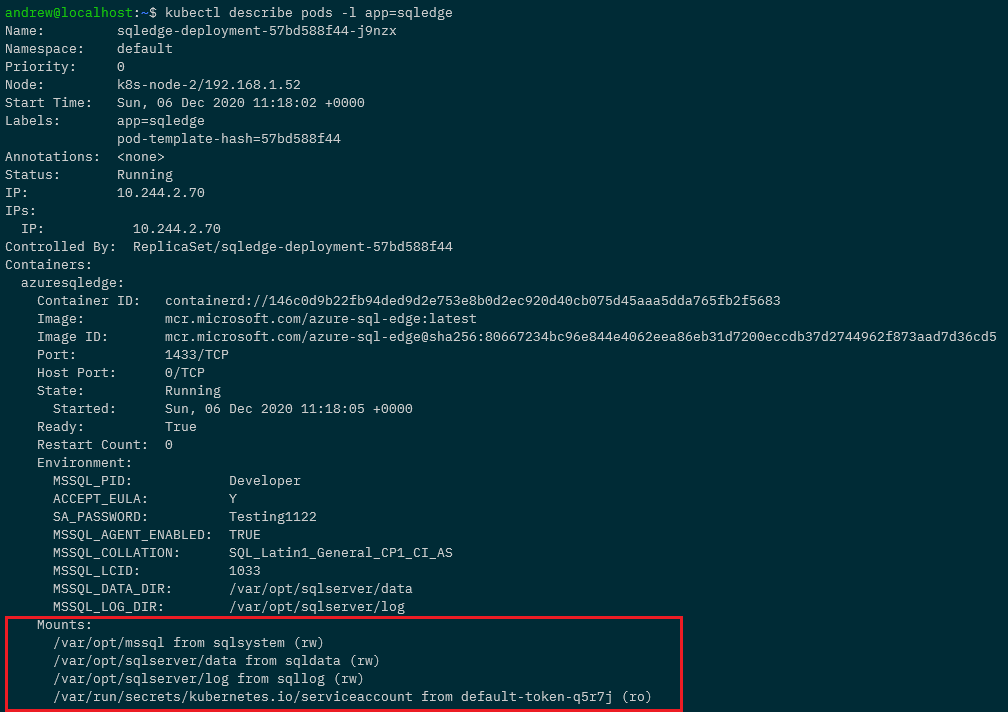
So we’re referencing our three persistent volume clams and mounting them as

  • sqlsystem-pvc – /var/opt/mssql
  • sqldata-pvc – /var/opt/sqlserver/data
  • sqllog-pvc – /var/opt/sqlserver/log

We’re also setting environment variables to set the default data and log paths to the paths mounted by persistent volume claims.

To deploy: –

kubectl apply -f https://gist.githubusercontent.com/dbafromthecold/92ddea343d525f6c680d9e3fff4906c9/raw/4d1c071e9c515266662361e7c01a27cc162d08b1/azure-sql-edge-persistent.yaml

To confirm: –

kubectl get all
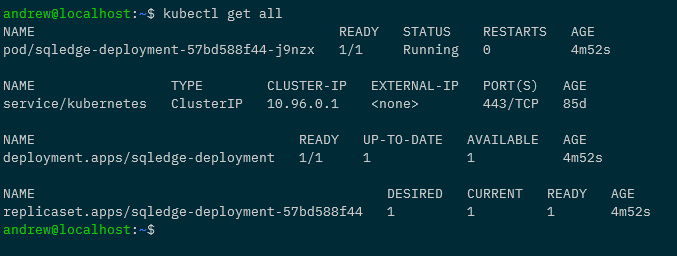
All looks good! To dig in a little deeper: –

kubectl describe pods -l app=sqledge

Testing the persistent volumes

But let’s not take Kubernetes’ word for it! Let’s create a database and see it persistent across pods.

So expose the deployment: –

kubectl expose deployment sqledge-deployment --type=LoadBalancer --port=1433 --target-port=1433

Get the External IP of the service created (provided by MetalLb configured in the previous post): –

kubectl get services

And now create a database with the mssql-cli: –

mssql-cli -S 192.168.1.101 -U sa -P Testing1122 -Q "CREATE DATABASE [testdatabase];"

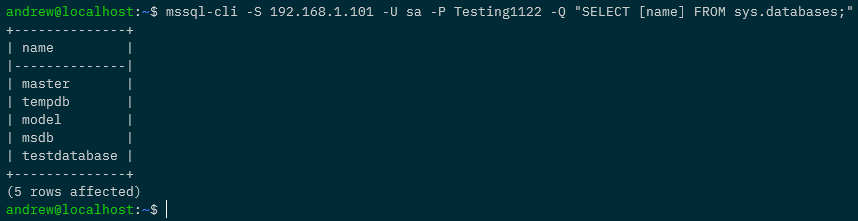
Confirm the database is there: –

mssql-cli -S 192.168.1.101 -U sa -P Testing1122 -Q "SELECT [name] FROM sys.databases;"
Confirm the database files: –

mssql-cli -S 192.168.1.101 -U sa -P Testing1122 -Q "USE [testdatabase]; EXEC sp_helpfile;"

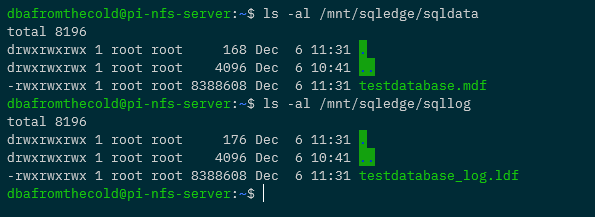
We can even check on the NFS server itself: –

ls -al /mnt/sqledge/sqldata
ls -al /mnt/sqledge/sqllog
Ok, so the “real” test. Let’s delete the existing pod in the deployment and see if the new pod has the database: –

kubectl delete pod -l app=sqledge

Wait for the new pod to come up: –

kubectl get pods -o wide

And then see if our database is in the new pod: –

mssql-cli -S 192.168.1.101 -U sa -P Testing1122 -Q "SELECT [name] FROM sys.databases;"
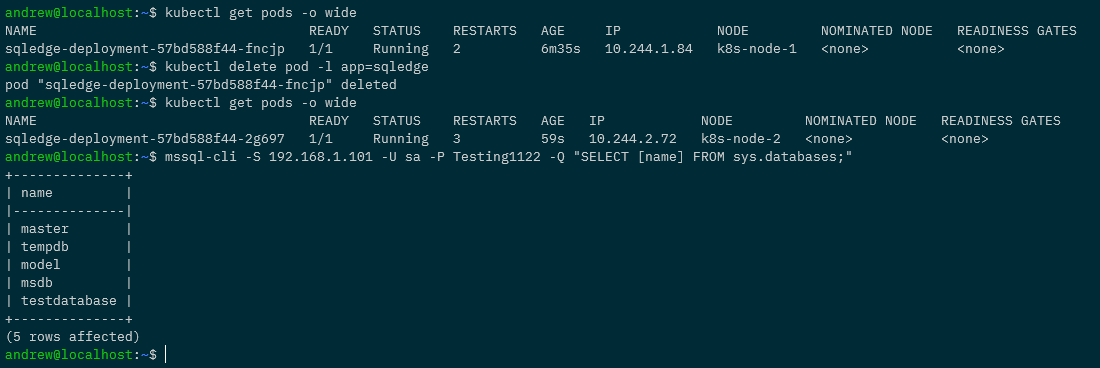
And that’s it! We’ve successfully built a Pi NFS server to deploy persistent volumes to our Raspberry Pi Kubernetes cluster so that we can persist databases from one pod to another! Phew!

Thanks for reading!

Building a Raspberry Pi cluster to run Azure SQL Edge on Kubernetes

A project I’ve been meaning to work on for a while has been to build my own Kubernetes cluster running on Raspberry Pis.

I’ve been playing around with Kubernetes for a while now and things like Azure Kubernetes Service are great tools to learn but I wanted something that I’d built from the ground up.

Something that I could tear down, fiddle with, and rebuild to my heart’s content.

So earlier this year I finally got around to doing just that and with Azure SQL Edge going GA with a disconnected mode I wanted to blog about my setup.

Here’s what I bought: –

1 x Raspberry Pi 4 Model B – 8BG RAM
3 x Raspberry Pi 4 Model B – 4GB RAM
4 x SanDisk Ultra 32 GB microSDHC Memory Card
1 x Pi Rack Case for Raspberry Pi 4 Model B
1 x Aukey USB Wall Charger Adapter 6 Ports
1 x NETGEAR GS308 8-Port Gigabit Ethernet Network Switch
1 x Bunch of ethernet cables
1 x Bunch of (short) USB cables

OK, I’ve gone a little overboard with the Pis and the SD cards. You won’t need an 8GB Raspberry Pi for the control node, the 4GB model will work fine. The 2GB model will also probably work but that would be really hitting the limit.

For the SD cards, 16GB will be more than enough (I went with a 64GB card for the control node, which is definite overkill).

In fact, you could just buy one Raspberry Pi and do everything I’m going to run through here on it. I went with a 4 node cluster (1 control node and 3 worker nodes) just because I wanted to tinker.

What follows in this blog is the complete build, from setting up the cluster, configuring the OS, to deploying Azure SQL Edge.

So let’s get to it!

Yay, delivery day!


Flashing the SD Cards

The first thing to do is flash the SD cards. I used Rufus but Etcher would work as well.

Grab the Ubuntu 20.04 ARM image from the website and flash all the cards: –

Once that’s done, it’s assembly time!


Building the cluster

So…many…little…screws…

But done! Now it’s time to plug it all in.

Plug all the SD cards into the Pis. Connect the USB hub to the mains and then plug the switch into your router. It’s plug and play so no need to mess around.

Once they’re connected, plug the Pis into the switch and then power them up (plug them into the USB Hub): –

(Ignore the zero in the background, it’s running pi-hole which I also recommend you check out!)


Setting a static IP address for each Raspberry Pi

We’re going to set a static IP address for each Pi on the network. Not doing anything fancy here with subnets, we’re just going to assign the Pis IP addresses that are currently not in use.

To find the Pis on the network with their current IP address we can run: –

nmap -sP 192.168.1.0/24

Tbh – nmap works but I usually use a Network Analyser app on my phone…it’s just easier (the output of nmap can be confusing).

Pick one Pi that’s going to be the control node and let’s ssh into it: –

ssh ubuntu@192.168.1.xx

When we first try to ssh we’ll have to change the ubuntu user password: –

The default password is ubuntu. Change the password to anything you want, we’re going to be disabling the ubuntu user later anyway.

Once that’s done ssh back into the Pi.

Ok, now that we’re back on the Pi run: –

sudo nano /etc/netplan/50-cloud-init.yaml

And update the file to look similar to this: –

network:
ethernets:
  eth0:
    addresses: [192.168.1.53/24]
    gateway4: 192.168.1.254
    nameservers:
      addresses: [192.168.1.5]
  version: 2

192.168.1.53 is the address I’m setting for the Pi, but it can be pretty much anything on your network that’s not already in use. 192.168.1.254 is the gateway on my network, and 192.168.1.5 is my DNS server (the pi-hole), you can use 8.8.8.8 if you want to.

There’ll also be a load of text at the top of the file saying something along the lines of “changes here won’t persist“. Ignore it, I’ve found the changes do persist.

DISCLAIMER – There’s probably another (better?) way of setting a static IP address on Ubuntu 20.04, this is just what I’ve done and works for me.

Ok, once the file is updated we run: –

sudo netplan apply

This will freeze your existing ssh session. So close that and open another terminal…wait for the Pi to come back up on your network on the new IP address.


Creating a custom user on all nodes

Let’s not use the default ubuntu user anymore (just because). We’re going to create a new user, dbafromthecold (you can call your user anything you want 🙂 ): –

sudo adduser dbafromthecold

Run through the prompts and then add the new user to the sudo group: –

sudo usermod -aG sudo dbafromthecold

Cool, once that’s done, exit out of the Pi and ssh back in with the new user and run: –

sudo usermod --expiredate 1 ubuntu

This way no-one can ssh into the Pi using the default user: –


Setting up key based authentication for all nodes

Let’s now set up key based authentication (as I cannot be bothered typing out a password every time I want to ssh to a Pi).

I’m working in WSL2 here locally (I just prefer it) but a powershell session should work for everything we’re going to be running.

Anyway in WSL2 locally run: –

ssh-keygen

Follow the prompt to create the key. You can add a passphrase if you wish (I didn’t).

Ok, now let’s copy that to the pi: –

cat ./raspberrypi_k8s.pub | ssh dbafromthecold@192.168.1.53 "mkdir -p ~/.ssh && touch ~/.ssh/authorized_keys && chmod -R go= ~/.ssh && cat >> ~/.ssh/authorized_keys"

What this is going to do is copy the public key (raspberrypi_k8s.pub) up to the pi and store it as /home/dbafromthecold/.ssh/authorized_keys

This will allow us to specify the private key when connecting to the pi and use that to authenticate.

We’ll have to log in with the password one more time to get this working, so ssh with the password…and then immediately log out.

Now try to log in with the key: –

ssh -i raspberrypi_k8s dbafromthecold@192.168.1.53

If that doesn’t ask for a password and logs you in, it’s working!

As the Pi has a static IP address we can setup a ssh config file. So run: –

echo "Host k8s-control-1
HostName 192.168.1.53
User dbafromthecold
IdentityFile ~/raspberrypi_k8s" > ~/.ssh/config

I’m going to call this Pi k8s-control-1, and once this file is created, I can ssh it to by: –

ssh k8s-control-1

Awesome stuff! We have setup key based authentication to our Pi!


Configuring the OS on all nodes

Next thing to do is rename the pi (to match the name we’ve given in our ssh config file): –

sudo hostnamectl set-hostname k8s-control-1
sudo reboot

That’ll rename the Pi to k8s-control-1 and then restart it. Wait for it to come back up and ssh in.

And we can see by the prompt and the hostname command…our Pi has been renamed!

Ok, now update the Pi: –

sudo apt-get update
sudo apt-get upgrade

N.B. – This could take a while.

After that completes…we need to enable memory cgroups on the Pi. This is required for the Kubernetes installation to complete successfully so run:-

sudo nano /boot/firmware/cmdline.txt

and add

cgroup_enable=memory

to the end, so it looks like this: –

and then reboot again: –

sudo reboot

Installing Docker on all nodes

Getting there! Ok, let’s now install our container runtime…Docker.

sudo apt-get install -y docker.io

Then set docker to start on server startup: –

sudo systemctl enable docker

And then, so that we don’t have to use sudo each time we want to run a docker command: –

sudo usermod -aG docker dbafromthecold

Log out and then log back into the Pi for that to take effect. To confirm it’s working run: –

docker version

And now…let’s go ahead and install the components for kubernetes!


UPDATE – As of Kubernetes v1.20 Docker is deprecated as a container runtime. Containerd or CRI-O are the recommended container runtimes. I ran through the process of updating this cluster to containerd here


Installing Kubernetes components on all nodes

So we’re going to use kubeadm to install kubernetes but we also need kubectl (to admin the cluster) and the kubelet (which is an agent that runs on each Kubernetes node and isn’t installed via kubeadm).

So make sure the following are installed: –

sudo apt-get install -y apt-transport-https curl

Then add the Kubernetes GPG key: –

curl -s https://packages.cloud.google.com/apt/doc/apt-key.gpg | sudo apt-key add -

Add Kubernetes to the sources list: –

cat <<EOF | sudo tee /etc/apt/sources.list.d/kubernetes.list
deb https://apt.kubernetes.io/ kubernetes-xenial main
EOF

Ok, I know that the 20.04 code name isn’t xenial, it’s focal but if you use kubernetes-focal you’ll get this when running apt-get update: –

E: The repository ‘https://apt.kubernetes.io kubernetes-focal Release’ does not have a Release file.

So to avoid that error, we’re using xenial.

Anyway, now update sources on the box: –

sudo apt-get update

And we’re good to go and install the Kubernetes components: –

sudo apt-get install -y kubelet=1.19.2-00 kubeadm=1.19.2-00 kubectl=1.19.2-00

Going for version 1.19.2 for this install….absolutely no reason for it other than to show you that you can install specific versions!

Once the install has finished run the following: –

sudo apt-mark hold kubelet kubeadm kubectl

That’ll prevent the applications from being accidentally updated.


Building the Control Node

Right, we are good to go and create our control node! Kubeadm makes this simple! Simply run: –

sudo kubeadm init | tee kubeadm-init.out

What’s happening here is we’re creating our control node and saving the output to kubeadm-init.out.

This’ll take a few minutes to complete but once it does, we have a one node Kubernetes cluster!

Ok, so that we can use kubectl to admin the cluster: –

mkdir -p $HOME/.kube
sudo cp -i /etc/kubernetes/admin.conf $HOME/.kube/config
sudo chown $(id -u):$(id -g) $HOME/.kube/config

And now…we can run: –

kubectl get nodes

Don’t worry about the node being in a status of NotReady…it’ll come online after we deploy a pod network.

So let’s setup that pod network to allow the pods to communicate with each other. We’re going to use Weave for this: –

kubectl apply -f "https://cloud.weave.works/k8s/net?k8s-version=$(kubectl version | base64 | tr -d '\n')"

A couple of minutes after that’s deployed, we’ll see the node becoming Ready: –

And we can check all the control plane components are running in the cluster: –

kubectl get pods -n kube-system

Now we have a one node Kubernetes cluster up and running!


Deploying a test application on the control node

Now that we have our one node cluster, let’s deploy a test nginx application to make sure all is working.

The first thing we need to do is remove the taint from the control node that prevents user applications (pods) from being deployed to it. So run: –

kubectl taint nodes $(hostname) node-role.kubernetes.io/master:NoSchedule-

And now we can deploy nginx: –

kubectl run nginx --image=nginx

Give that a few seconds and then confirm that the pod is up and running: –

kubectl get pods -o wide

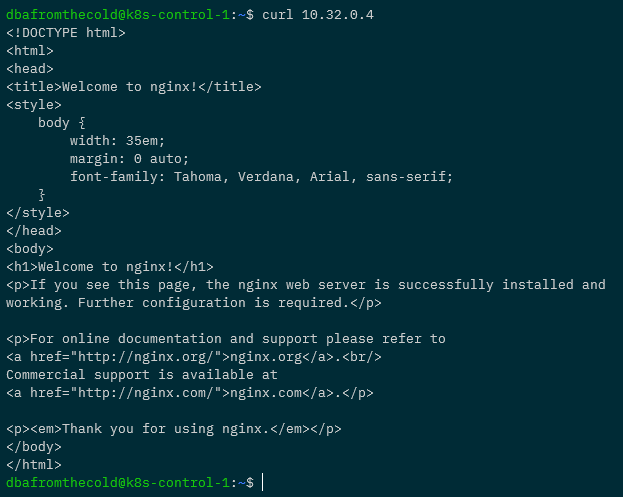
Cool, the pod is up and running with an IP address of 10.32.0.4. We can run curl against it to confirm the application is working as expected: –

curl 10.32.0.4

Boom! We have the correct response so we know we can deploy applications into our Kubernetes cluster! Leave the pod running as we’re going to need it in the next section.

Don’t do this now but if you want to add the taint back to the control node, run: –

kubectl taint nodes $(hostname) node-role.kubernetes.io/master:NoSchedule

Deploying MetalLb on the control node

There are no SQL client tools that’ll run on ARM infrastructure (at present) so we’ll need to connect to Azure SQL Edge from outside of the cluster. The way we’ll do that is with an external IP provided by a load balanced service.

In order for us to get those IP addresses we’ll need to deploy MetalLb to our cluster. MetalLb provides us with external IP addresses from a range we specify for any load balanced services we deploy.

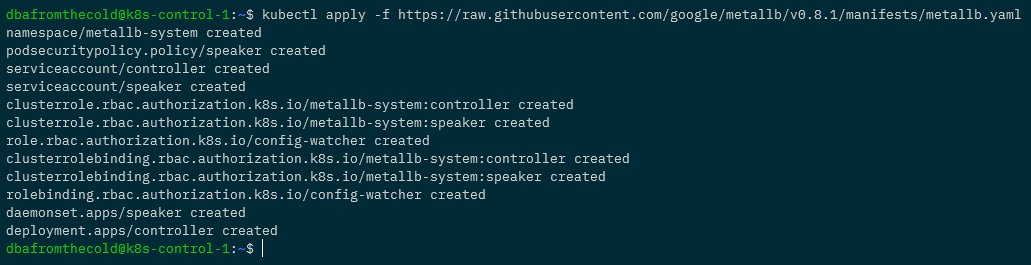
To deploy MetalLb, run: –

kubectl apply -f https://raw.githubusercontent.com/google/metallb/v0.8.1/manifests/metallb.yaml

And now we need to create a config map specifying the range of IP addresses that MetalLb can use: –

apiVersion: v1
kind: ConfigMap
metadata:
  namespace: metallb-system
  name: config
data:
  config: |
    address-pools:
    - name: default
      protocol: layer2
      addresses:
        - 192.168.1.100-192.168.1.110

What we’re doing here is specifying the IP range that MetalLb can assign to load balanced services as 192.168.1.100 to 192.168.1.110

You can use any range you want, just make sure that the IPs are not in use on your network.

Create the file as metallb-config.yaml and then deploy into the cluster: –

kubectl apply -f metallb-config.yaml

OK, to make sure everything is working…check the pods in the metallb-system namespace: –

kubectl get pods -n metallb-system

If they’re up and running we’re good to go and expose our nginx pod with a load balanced service:-

kubectl expose pod nginx --type=LoadBalancer --port=80 --target-port=80

Then confirm that the service created has an external IP: –

kubectl get services

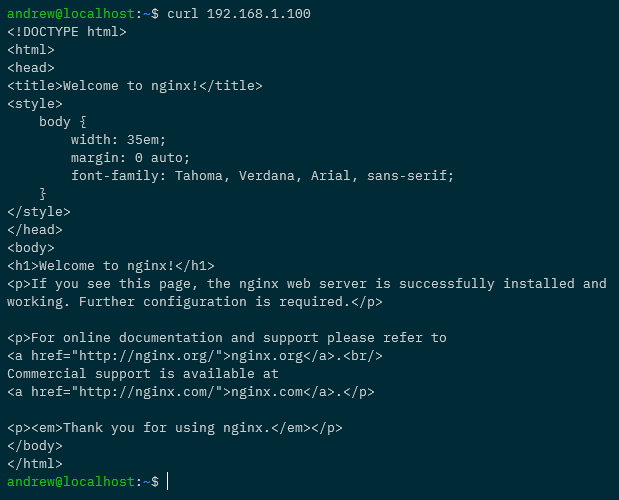
Awesome! Ok, to really confirm everything is working…try to curl against that IP address from outside of the cluster (from our local machine): –

curl 192.168.1.100

Woo hoo! All working, we can access applications running in our cluster externally!

Ok, quick tidy up…remove the pod and the service: –

kubectl delete pod nginx
kubectl delete service nginx

And now we can add the taint back to the control node: –

kubectl taint nodes $(hostname) node-role.kubernetes.io/master:NoSchedule

Joining the other nodes to the cluster

Now that we have the control node up and running, and the worker nodes ready to go…let’s add them into the cluster!

First thing to do (on all the nodes) is add entries for each node in the /etc/hosts file. For example on my control node I have the following: –

192.168.1.54 k8s-node-1
192.168.1.55 k8s-node-2
192.168.1.56 k8s-node-3

Make sure each node has entries for all the other nodes in the cluster in the file…and then we’re ready to go!

Remember when we ran kubeadm init on the control node to create the cluster? At the end of the output there was something similar to: –

sudo kubeadm join k8s-control-1:6443 --token f5e0m6.u6hx5k9rekrt1ktk \
--discovery-token-ca-cert-hash sha256:fd3bed4669636d1f2bbba0fd58bcddffe6dd29bde82e0e80daf985a77d96c37b

Don’t worry if you didn’t save it, it’s in the kubeadm-init.out file we created. Or you can run this on the control node to regenerate the command: –

kubeadm token create --print-join-command

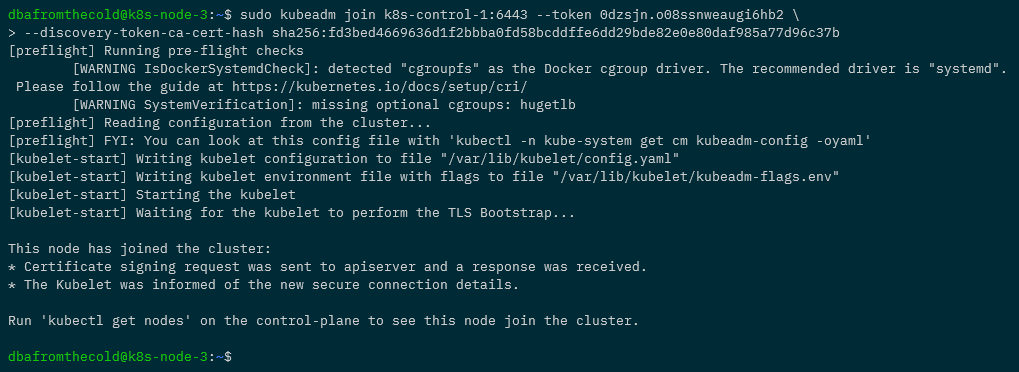
So let’s run that join command on each of the nodes: –

Once that’s done, we can confirm that all the nodes have joined and are ready to go by running: –

kubectl get nodes

Fantastic stuff, we have a Kubernetes cluster all built!


External kubectl access to cluster

Ok, we don’t want to be ssh’ing into the cluster each time we want to work with it, so let’s setup kubectl access from our local machine. What we’re going to do is grab the config file from the control node and pull it down locally.

Kubectl can be installed locally from here

Now on our local machine run: –

mkdir $HOME/.kube

And then pull down the config file: –

scp k8s-control-1:/home/dbafromthecold/.kube/config $HOME/.kube/

And to confirm that we can use kubectl locally to administer the cluster: –

kubectl get nodes

Wooo! Ok, phew…still with me? Right, it’s now time to (finally) deploy Azure SQL Edge to our cluster.


Running Azure SQL Edge

Alrighty, we’ve done a lot of config to get to this point but now we can deploy Azure SQL Edge. Here’s the yaml file to deploy: –

apiVersion: apps/v1
kind: Deployment
metadata:
  name: sqledge-deployment
spec:
  replicas: 1
  selector:
    matchLabels:
      app: sqledge
  template:
    metadata:
      labels:
        app: sqledge
    spec:
      containers:
        - name: azuresqledge
          image: mcr.microsoft.com/azure-sql-edge:latest
          ports:
            - containerPort: 1433
          env:
            - name: MSSQL_PID
              value: "Developer"
            - name: ACCEPT_EULA
              value: "Y"
            - name: SA_PASSWORD
              value: "Testing1122"
            - name: MSSQL_AGENT_ENABLED
              value: "TRUE"
            - name: MSSQL_COLLATION
              value: "SQL_Latin1_General_CP1_CI_AS"
            - name: MSSQL_LCID
              value: "1033"
      terminationGracePeriodSeconds: 30
      securityContext:
        fsGroup: 10001
---
apiVersion: v1
kind: Service
metadata:
  creationTimestamp: null
  name: sqledge-deployment
spec:
  ports:
  - port: 1433
    protocol: TCP
    targetPort: 1433
  selector:
    app: sqledge
  type: LoadBalancer

What this is going to do is create a deployment called sqledge-deployment with one pod running Azure SQL Edge and expose it with a load balanced service.

We can either create a deployment.yaml file or deploy it from a Gist like this: –

kubectl apply -f https://gist.githubusercontent.com/dbafromthecold/1a78438bc408406f341be4ac0774c2aa/raw/9f4984ead9032d6117a80ee16409485650258221/azure-sql-edge.yaml

Give it a few minutes for the Azure SQL Edge deployment to be pulled down from the MCR and then run: –

kubectl get all

If all has gone well, the pod will have a status of Running and we’ll have an external IP address for our service.

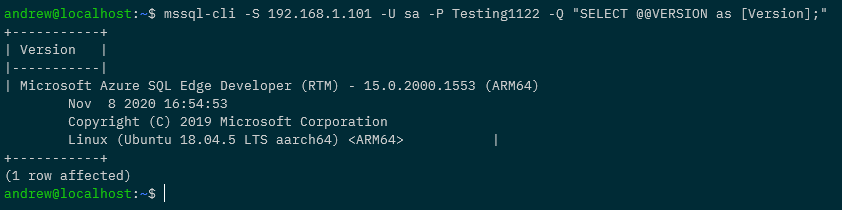
Which means we can connect to it and run a SQL command: –

mssql-cli -S 192.168.1.101 -U sa -P Testing1122 -Q "SELECT @@VERSION as [Version];"


N.B. – I’m using the mssql-cli here but you can use SSMS or ADS.

And that’s it! We have Azure SQL Edge up and running in our Raspberry Pi Kubernetes cluster and we can connect to it externally!

Thanks for reading!

Running Azure SQL Database Edge on a Raspberry Pi


Update – October 2020 – This post will take you through the whole process of getting an Azure IoT Hub setup and linking Azure SQL Edge running from a Raspberry Pi to it.

If you want to just run Azure SQL Edge without the IoT Hub, you can follow the MS Docs here: –
https://docs.microsoft.com/en-us/azure/azure-sql-edge/disconnected-deployment


One of the coolest new projects out there is Azure SQL Database Edge: –

https://azure.microsoft.com/en-us/services/sql-database-edge/

This allows SQL to run on ARM devices, just think how many devices are out there that run ARM.

That includes my favourite device, the Raspberry Pi.

So, let’s run through how to get SQL running on a Raspberry Pi!

First, Azure SQL Database Edge is in public preview so we’ll need to sign up here.

Once in the preview we need to set up our Raspberry Pi. We’ll need to use a 64-bit OS (Raspbian is 32-bit) so for this setup we’re going to use Ubuntu 18.04 which can be downloaded here.

Once downloaded, plug the SD card into a laptop and use Rufus to flash the card: –

Enable ssh by dropping a file called ssh onto the boot partition of the SD card (see Section 3 here).

Then plug the SD card into the Pi, and connect the Pi to a router (this avoids having to attach a monitor and keyboard in order to setup a wifi connection).

Power on the Pi and give it a minute to spin up. To find the Pi’s IP address we can use nmap to scan the local network: –

nmap -sP 192.168.1.0/24

Then ssh to the Pi via (default username and password is ubuntu): –

ssh ubuntu@<THE PI IP ADDRESS>

N.B – We’ll be prompted to change our password when we first log in.

Ok, that’s our Pi ready to go. Now, in order to get Azure SQL Database Edge running on it we need to create an IoT Hub in Azure and connect our Pi to it. This will then allow us to create a deployment in Azure that’ll push SQL Edge down to our Pi and run it in a Docker container.

To set the Iot Hub up, we’re going to use the azure-cli.

In order to use the IoT commands we need to make sure that we’ve got at least v2.0.70 of the azure-cli installed:-

az version

N.B. – We can grab the .msi to update azure-cli here.

Now add the azure-iot extension: –

az extension add –-name azure-iot

Log in to azure: –

az login

Create a resource group to hold all the objects that we are going to create: –

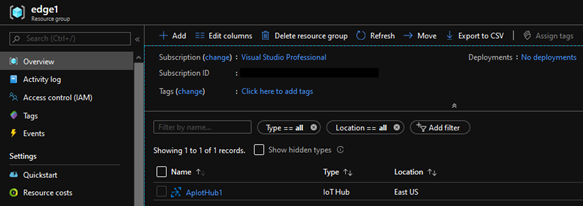
az group create --name edge1 --location eastus

Now we can create an IoT Hub: –

az iot hub create --name ApIotHub1 --resource-group edge1

Register a device with the hub: –

az iot hub device-identity create --device-id raspberry-pi-k8s-1 --hub-name ApIotHub1 --edge-enabled

Retrieve the connection string for the device: –

az iot hub device-identity show-connection-string --device-id raspberry-pi-k8s-1 --hub-name ApIotHub1

Once we have the connection string, we can install the IoT Edge runtime on the Raspberry Pi.

SSH into the Pi: –

ssh ubuntu@<THE PI IP ADDRESS>

Get the repository information: –

curl https://packages.microsoft.com/config/ubuntu/18.04/multiarch/prod.list > ./microsoft-prod.list

Copy the repository to the sources list: –

sudo cp ./microsoft-prod.list /etc/apt/sources.list.d/

Install the MS GPG public key: –

curl https://packages.microsoft.com/keys/microsoft.asc | gpg --dearmor > microsoft.gpg
sudo cp ./microsoft.gpg /etc/apt/trusted.gpg.d/

Now we can install the container runtime. Note that we’re not installing Docker, we’re installing the tools from the Moby project (which is the project that docker is built from, so the commands we’re familiar with, docker run, docker images etc. are available): –

sudo apt-get update && sudo apt-get install –y moby-engine moby-cli

Install the IoT Edge security daemon: –

sudo apt-get install –y iotedge

Now we need to add our connection string to the security daemon config: –

sudo nano /etc/iotedge/config.yaml

Find the section below and add the connection string obtained earlier (remove “connectionString”: from it): –

'provisioning:
source: "manual"
device_connection_string: "CONNECTION STRING' \

Save the changes, exit, and restart the security daemon: –

sudo systemctl restart iotedge

And then confirm that the daemon is running: –

sudo systemctl status iotedge
sudo iotedge check
sudo iotedge list

N.B. – We may have to ctrl+c out of the check command.

We can also check that the agent image is there: –

docker image ls

Ok, everything is setup! Now we can install SQL Edge on the Raspberry Pi!

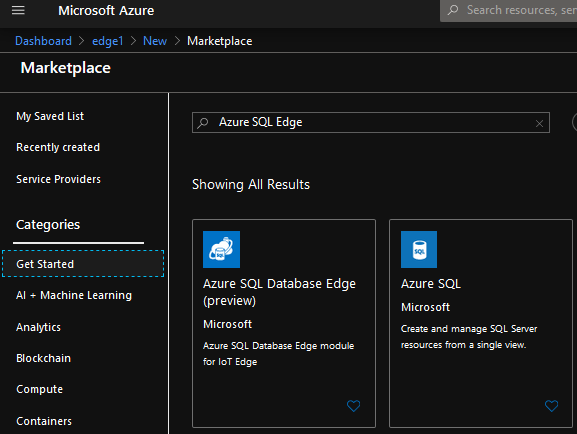
Go back to the portal and search for Azure SQL Edge: –

Select Azure SQL Database Edge Developer and hit Create: –

On the next page, hit Find Device. The Raspberry Pi should be there: –

Select the device and on the next page hit Create: –

This will take us to a page to configure the deployment: –

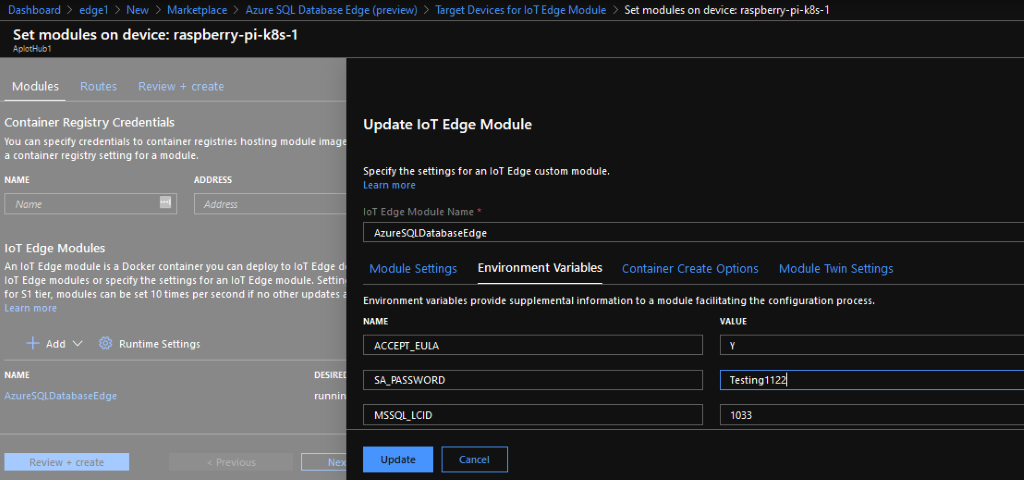
Click AzureSQLDatabaseEdge and on the Environment Variables page, enter a SA Password: –

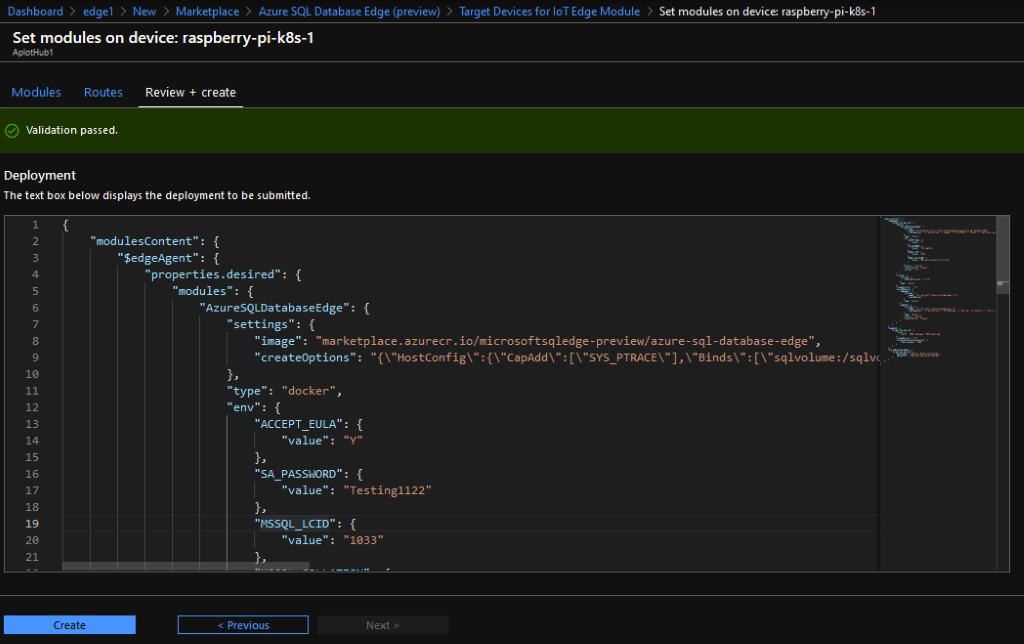
Hit Update and then Review + Create: –

Review the JSON, it should all be OK, and hit Create.

This will take us back to the hub page: –

The IoT Edge Module Count should be 3. Click on the device: –

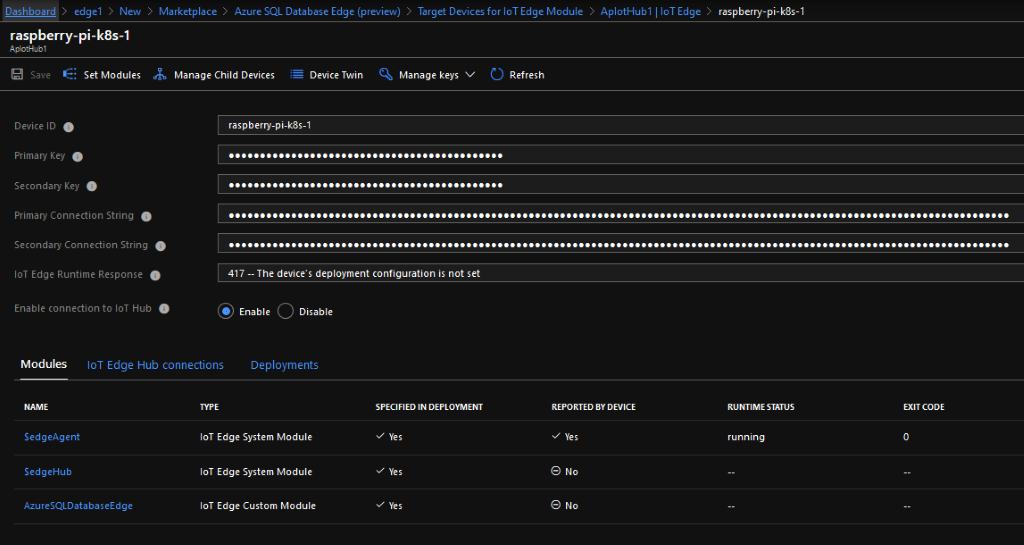
Now we’re waiting for the modules to be deployed to the Raspberry Pi.

After a few minutes we should see (don’t worry if there’s a 500 error, it’ll clear once the images are pulled to the device): –

And on the Pi itself: –

docker image ls

docker container ls

If the container is up and running, we can connect remotely using our Pi’s IP address in SSMS (or ADS): –

And that’s Azure SQL Database Edge running on a Raspberry Pi! How cool is that?!

Thanks for reading!